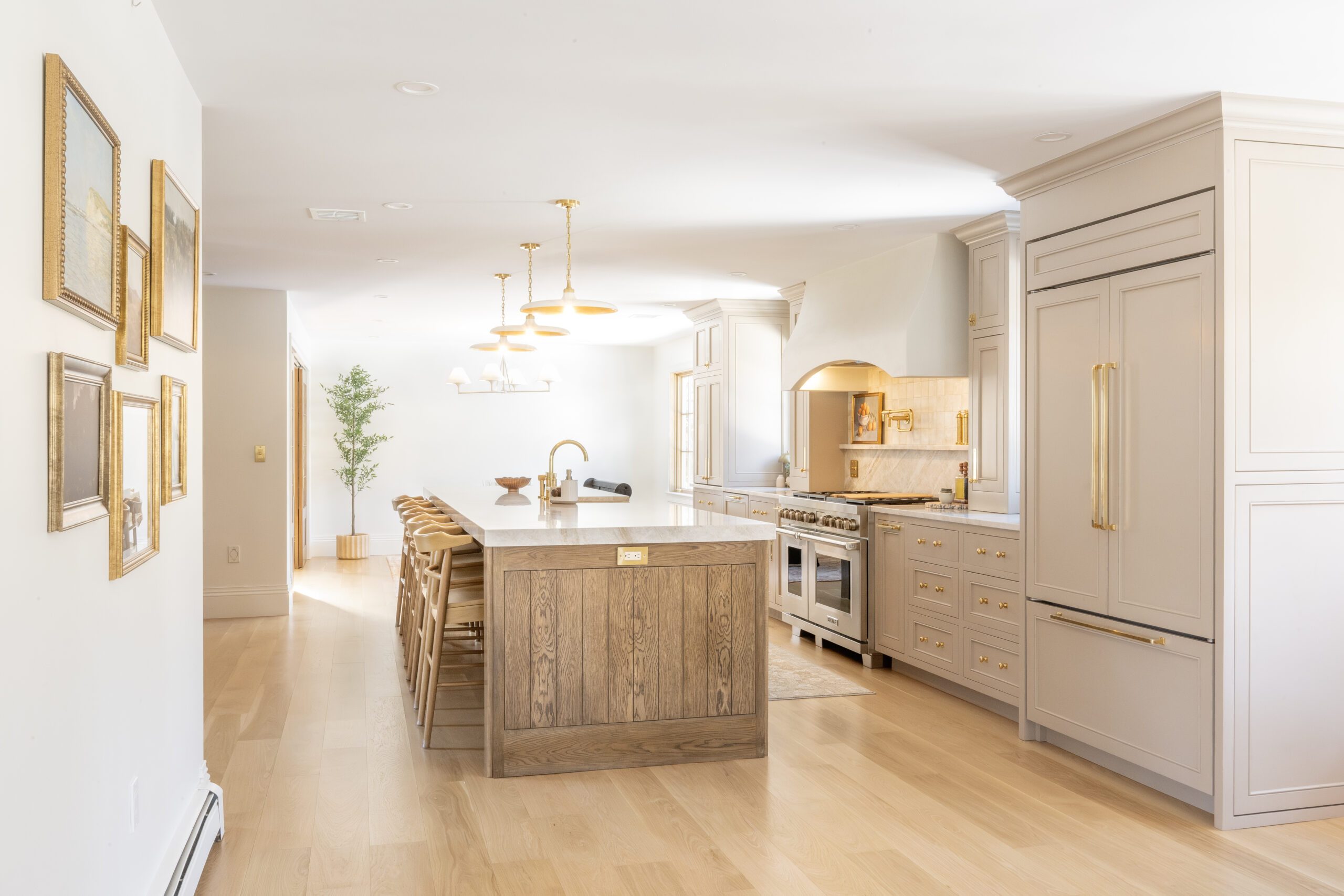
How a dark, disconnected kitchen became the heart of a family home — without sacrificing an inch of storage or style.
Some renovations are about fixing what’s broken. This one was about unlocking what was always possible.
When this young family came to us, their kitchen checked all the boxes on paper — but none of the ones that mattered. It was dim, disconnected, and cramped. The dining room sat behind a full dividing wall and went largely unused; too separated from the action to feel worth gathering in. The layout worked in a technical sense. It just didn’t work for them.
Their ask was clear: an open, light-filled space where cooking, homework, meals, and conversation could all happen together, without sacrificing storage or style. You can see more projects like this in our portfolio of completed work. What emerged here was something more — a full first-floor reinvention that transformed a standard builder-grade home into something entirely their own.
Before & after: A closed-off, dim kitchen becomes an open, light-filled hub where cooking, gathering, and everyday family moments now flow together naturally.
Opening up (without giving anything up)
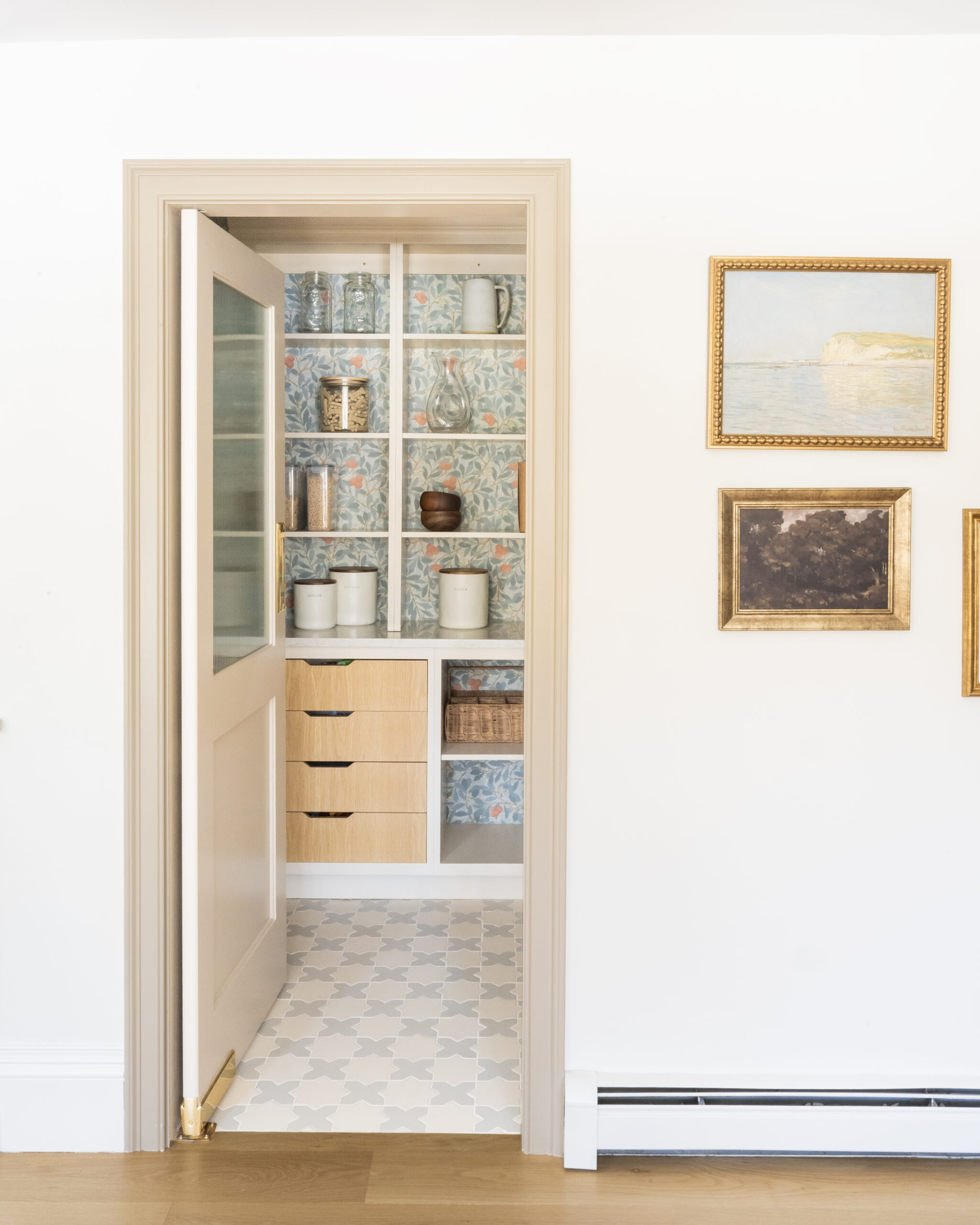
The first move was removing the wall between the kitchen and dining area. Better flow, more natural light, a sense of space the original floor plan never offered. But opening walls means losing cabinetry — and with young kids and a full household, storage wasn’t negotiable.
The solution came from looking at what already existed but wasn’t working. An underutilized closet became a proper walk-in pantry, reclaiming every inch that the wall removal cost. It’s the kind of trade that only works with careful planning, and it’s proof that thoughtful kitchen renovation doesn’t ask you to choose between openness and function.
With smart planning, nothing has to be lost to gain everything.
A place for every moment
With the kitchen opened to the dining area, the layout needed to do more — and it does. On the opposite side of the kitchen, a breakfast nook creates a quieter place to land. Custom built-in seating with storage beneath, a dedicated coffee bar with cabinetry above: it’s a genuine morning oasis, not an afterthought. The nook flows directly into the living area, which the clients had already renovated themselves during the pandemic — and together, the two spaces connect seamlessly.
Running throughout the first floor are brushed brass finishes, light switches, window hardware, accents throughout, lending warmth and consistency to spaces that might otherwise feel like separate renovations. It’s a design thread that quietly unifies everything.
The cocktail room: a space for the grown-ups
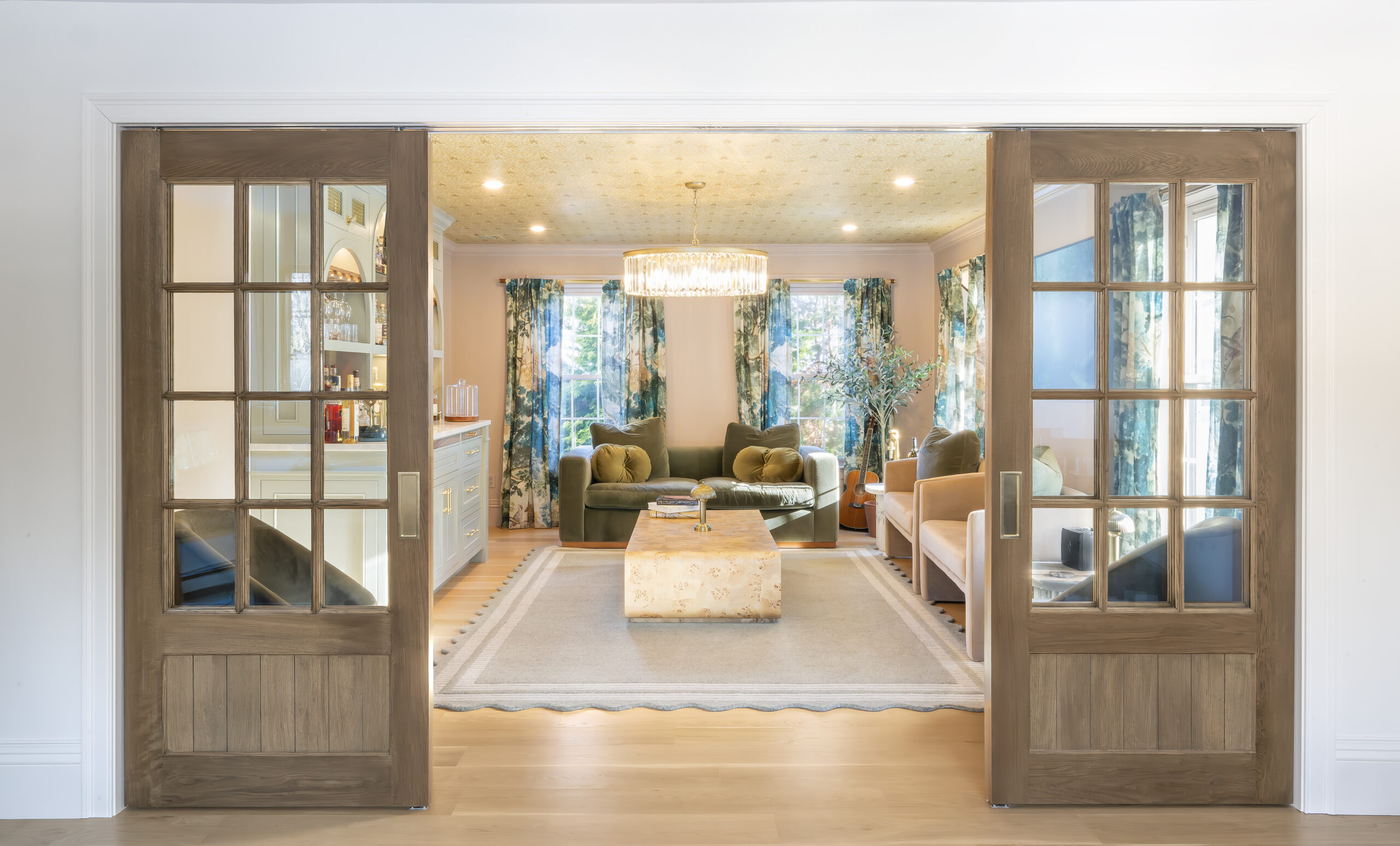
Just off the dining area, a separate space the family calls the cocktail room sits behind a set of French doors. Custom bar cabinetry, a clear separation from the main flow of the house, and just enough remove from the noise of family life to feel like a proper retreat. In a busy household with young kids, having a designated adult space isn’t a luxury, it’s a lifeline.
The French doors do a lot of work here. They create visual connection without sacrificing the sense of arrival when you step through.
A partial renovation, a complete transformation
This was, technically, a partial renovation. We didn’t touch the whole house, that’s often the smarter approach. Paired with the clients’ own pandemic-era living area work and some selective repainting, the first floor now reads as a single cohesive vision. A far cry from the builder-grade spec it started as.
The neighbors have the same bones. This family now has a home.
Curious what a focused renovation could do for your space? Explore our services or get in touch — we’d love to hear what you’re imagining.